
TRAPPED (2017)
HD, 13 mins
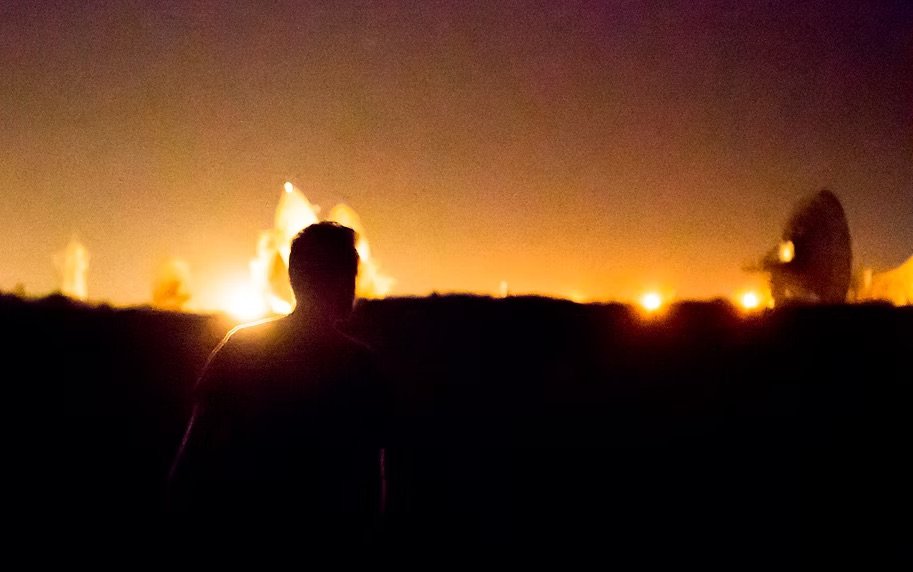
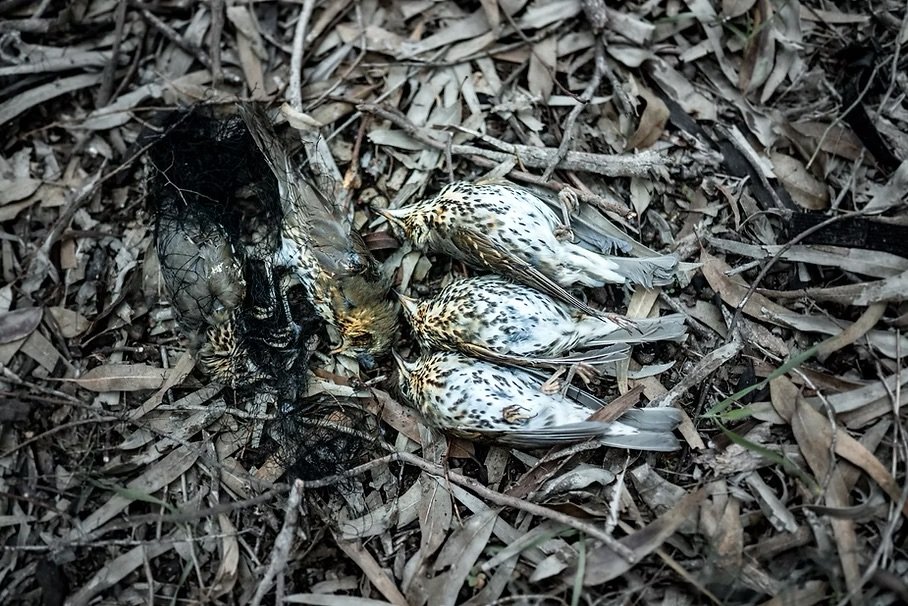
In September 2016 I set off to the island of Cyprus, where every Autumn the largest massacre of songbirds in Europe takes place. 15,000 birds are estimated to lose their lives each night during the Autumn migration, amounting to 2.5 million birds a year. Traditionally the birds were caught with glue to be boiled and eaten, but today, with the practice being long outlawed, the dish has become an expensive delicacy and can cost around €50-80 per serving. By joining environmental activists from CABS (Committee Against Bird Slaughter), who have been fighting for a decade to put an end to this practice, I learnt that the bird trapping business feeds an estimated €15 million into the black market and uses extensive trapping methods employing kilometres of mist-nets and powerful electronic callers to lure in the birds. While industrial trapping decimates the wild populations of small songbirds, it remains a question why the local Cypriot and British authorities aren't doing more to put an end to this massacre.
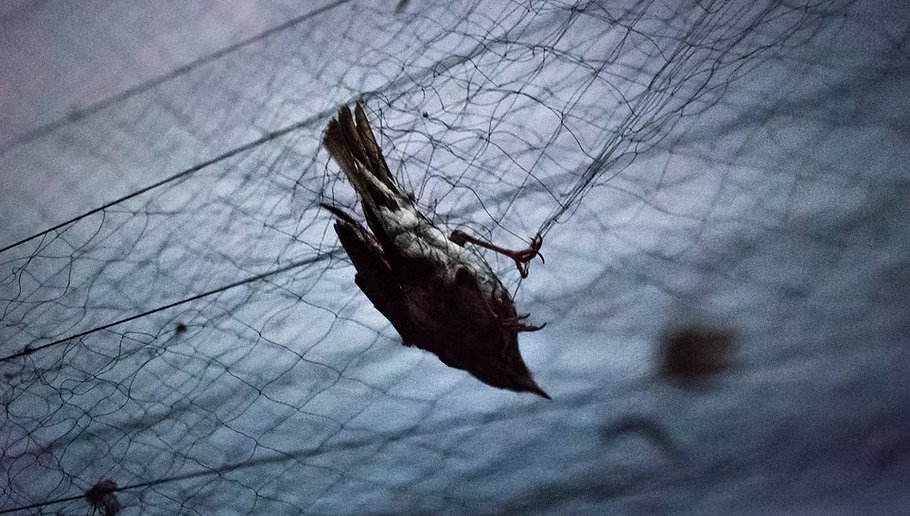
This is a film that happened by accident. I hadn't planned on making it, and I wasn't carrying any filmmaking equipment with me. At the time I merely wanted to find out more about the topic, so I volunteered with CABS in the hope of saving a few migrants. But as soon as I landed in Cyprus I realised this was a story that needed to be told, so I grabbed my small camera and with a single 35mm lens I started shooting.
SEA SHEPHERD
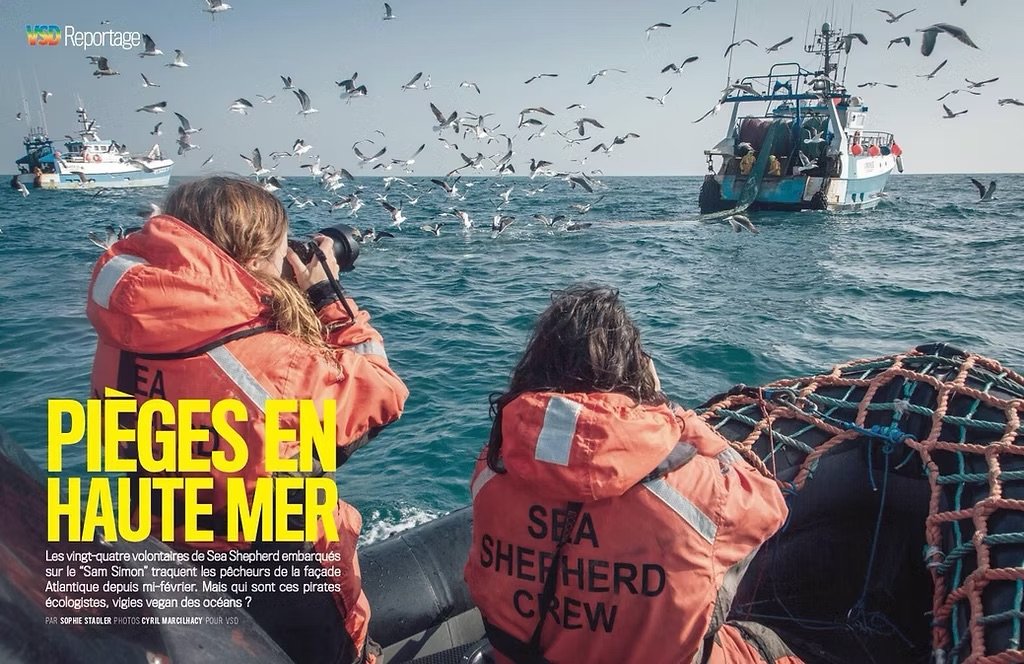
Sea Shepherd is a non-profit organisation set up in 1977 and committed to the defence, protection and conservation of the oceans. Their strategies involve the use of direct action to defend marine wildlife and protect their habitat, with a focus on exposing the crimes happening at sea through the use of media.
As part of the media team onboard the M/Y Sam Simon, I spent three months documenting the work of Sea Shepherd, first for Operation Sola Stella III in Liberia, and then for Operation Dolphin Bycatch along the Atlantic coast of France.
OPERATION SOLA STELLA III - FIGHTING IUU FISHING IN LIBERIA
IUU fishing stands for Illegal, Unreported and Unregulated fishing. Developing countries are particularly vulnerable to IUU fishing, which accounts for up to 40% of the fish caught in West African waters. In countries like Liberia, the resources of the Liberian Coast Guard to monitor, control and surveil all of Liberia’s sovereign waters are stretched. Sea Shepherd's mission is to assist them in identifying and arresting the unlicensed foreign industrial vessels operating in its waters, and to protect the six nautical miles closest to shore reserved for subsistence, artisanal and semi-artisanal fishing, an industry which employs 33,000 Liberians.
Captain Alistair Allan of Sea Shepherd's M/Y Sam Simon describes how Liberian waters have recovered from overfishing thanks to the successful partnership with the Liberian Coast Guard to stop the scourge of illegal fishing in their sovereign waters. "When I compare the wildlife to when I was first here to now, the pods of dolphins, the schools of tuna are so much more ample", says Captain Allan. "What that means is that for the 33,000 Liberians who depend on local artisanal fishing, their life is returning to normal; they're seeing fish in their nets once again."
SEA SHEPHERD - OPERATION DOLPHIN BYCATCH
Each winter thousands of dolphins visit the Atlantic coast of France to feed on its abundant fish, and each year thousands of them die in the nets of trawling vessels that are busy catching sea bass and hake. Even though dolphins are endangered and protected animals, these deaths aren't monitored nor punished, as they are considered "inevitable bycatch" under the French law.
Sea Shepherd’s Operation Dolphin ByCatch aims to expose dolphin deaths off the Atlantic Coast to put pressure on the French government to require fisheries observers on all commercial fishing vessels, enforce the accurate reporting of bycatch, and ban fishing practices that unnecessarily result in thousands of dolphins killed as bycatch every year.
During the first six weeks of the 2018 campaign, 600 dead dolphins washed up on French beaches in the Vendée, Charente Maritime, and Gironde. These deaths are only the tip of the iceberg though, since more than 80% of the corpses, often gutted, sink at sea. Most of the bodies found are mutilated, with severed fins, gaff hook marks, deep cuts, and broken rostrums consistent with capture in fishing gear.
In the video I captured below you can see the dead body of a dolphin, trapped in the fishing net, while being pulled up by a trawler. This was one of many we filmed and reported during the campaign.
The question of how "accidental" these deaths are is what this campaign wants to call the attention to. Can we really define accidental something that happens repeatedly, consistently and predictably, which causes thousands of losses in a protected species? I believe these deaths are systematic and inevitable, intrinsically connected with the fishing methods, and the use of the word "accidental by-catch" is misleading, to say the least.
Between 2015 and 2017 I had the pleasure of being involved with the Science for Environment Policy group for the EU DG Environment, producing short explainer films for their newsletter, which went out to policy makers in Europe. These films, which condensed all the most recent research into the environmental challenges faced by the EU, were both challenging and fascinating to make. A real example of how science, policy and film can work together.
Combatting illegal poisoning of wild animals in Spain
Produced for EU DG Environment - Science for Environment Policy
Poisoned bait has been used as a method of pest control for hundreds of years, generally to kill animals that are regarded as "detrimental" to agriculture or hunting, such as wolves and raptors. However, this poses a huge threat to biodiversity and during the past 10 years, approximately 7000 endangered animals have been illegally killed by poison, including eagles, kites, vultures and brown bears. Even though this practice has been illegal in Spain since 1983, convictions have notoriously been hard to obtain and fines have been too low to act as deterrents.
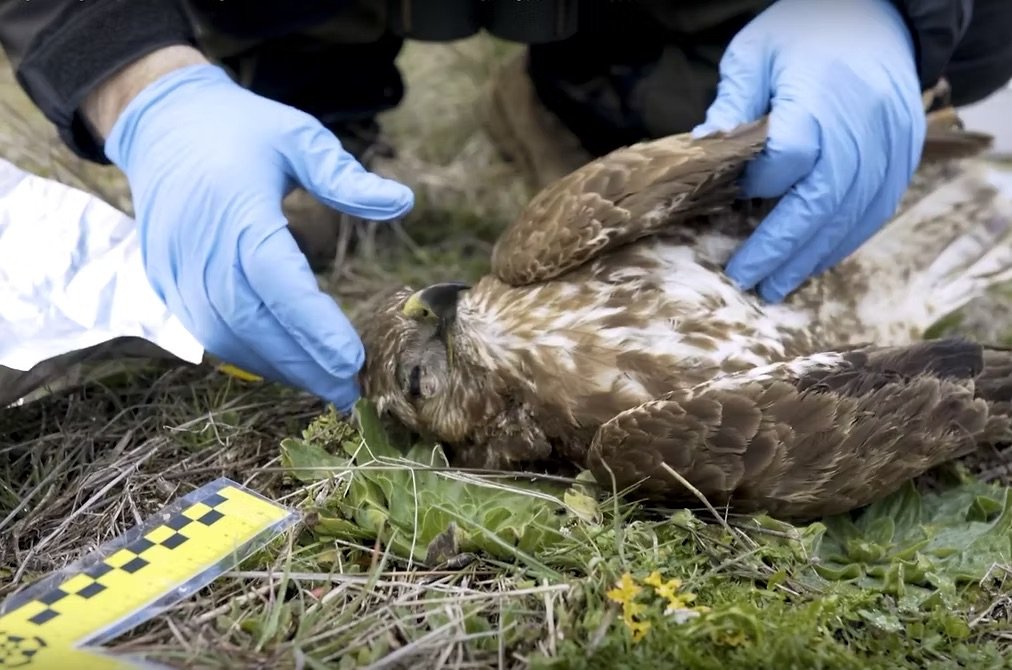
The LIFE+ project VENENO was designed to combat cases of illegal poisoning of wildlife by developing action plans and establishing protocols to be used to collect the evidence and pursue those responsible. The project also created and trained a special Poison Investigation Unit and worked to increase awareness among judges and prosecutors of the importance of such wildlife crimes.
The efforts put into this project resulted in a number of successful sentences, and some of the highest fines ever imposed in Europe. In January 2012 a farmer was convicted of laying out nine poisoned baits and of poisoning six Spanish Imperial Eagles and a fox. His sentence, which set a precedent for this sort of crimes, consisted of 18 months imprisonment, a 3 year disqualification from hunting and a 360,000 euro fine to be paid for the estimated value of the six eagles.
USING TECHNOLOGY TO COMBAT ENVIRONMENTAL CRIME
Produced for EU DG Environment - Science for Environment Policy
Technological advances in recent years have made it possible for regulatory bodies, NGOs and citizens to employ more technologies in the monitoring and enforcement of environmental law. This video features three interviews about the innovative ways in which smartphone apps, drones and satellites are empowering organisations and citizens in the fight against environmental crime.
For comments, questions, reflections, ideas or complaints drop me a line...